Table Of Content
People with 1A hair can often experience dryness, thinning, and a lack of volume in their strands. "Since Type 1 hair can also tend to have a flatness to it, it is beneficial to use volumizing and texturizing shampoos and conditioners to enhance the shape," says Celebrity hairstylist Anthony Cristiano. Having a recessive gene typically has no implications until it is inherited along with a dominant gene from the other parent. In this case, the recessive gene will be “covered up” by the dominant gene, and the physical or medical trait caused by the dominant gene will be the only one expressed. However, in some cases, a recessive gene can have subtle effects on physical traits, such as causing blond hair to be a lighter shade or making someone more susceptible to certain medical conditions.
The Role of Hair Care
The increased performance in these fibre features between ‘straight’ and ‘near-straight’ hair is therefore not surprising. The apparent trend of ‘near-straight’ fibres to be thinner than ‘wavy’ fibres is somewhat surprising. Further studies are needed, using a larger sample pool, from interracial ancestry. Modern studies have shown that the basis of this relationship is phenotypical and not racial [21]. It has also been demonstrated (in vitro and in vivo) that curly fibres, emerging angularly from the scalp, are generated by curved follicles (that have a retrocurvature at the bulb). Non-curly hair, on the other hand, emerges from collinear follicles that are embedded at approximately right angles with the scalp [21,30,31].
Conclusion: Embracing Curly Hair Diversity
Use it on wet hair at the end of your routine to define your pattern, hold it for longer and help get rid of frizzy hair. These three curly hair types can also be referred to numerically, as types 2, 3, and 4. The higher the number, the tighter the curl pattern of this hair type. Contrary to the popular narrative type 4 hair is not the hardest texture to care for—it just requires a different kind of TLC. Type 4 hair typically has a tighter curl pattern and is prone to shrinkage. Your texture also will have more fluff and volume, or a zig-zag shape, rather than a loose wave or curl.
(a) Curvature fibre model
Your curl pattern isn’t very defined naturally and especially when dry, so you will have to do some work to bring out the pattern in your hair. Products that reinforce moisture and define curls will be your favorite however be mindful to use products that are light in texture and don’t produce build-up. Heavier products like creams and oils should always be used on moisturized hair as these products don’t moisturize the hair but rather seal in moisture.
Similar dissymmetry of fibronectin glycoprotein has been shown in the CTS [21]; K82 (hHb2 keratin) in the early forming cuticle [31]; and K38 (hHa8 keratin) in the follicle bulb [21]. K38 is also more pronounced in the curly fibre follicle, against the sparse, homogeneous distribution of K38 in the straight fibre follicle [21]. Expression of growth factor insulin-like growth factor-binding protein 5 (IGFBP-5) has also been seen to be significantly higher in curly than in straight fibres [32]. This model could even explain how curly haired parents sometimes have a straight haired child and vice versa.
Health Conditions
The two alleles from your biological father combine with two alleles from your biological mother, giving you four in all. Coily hair is also known as type 4 hair, and can be further split out into 4a, 4b, and 4c, depending on the tightness of the curly hair type. The hair typing system was conceived by Oprah’s longtime hairstylist Andre Walker. This ingenious way of categorizing our hair from wavy to curly to coily provides informative transparency in determining what products, routines, and techniques work for your hair. The system starts with type 1 hair which is straight and fine and ends with type 4 hair which is coarse with tight coils.
Your hair’s texture may look a little different with the change in altitude, humidity, and even the water you’re using to wash your hair. Depending on how tight the wave pattern is, it can be further divided in 2a, 2b and 2c. I have also arranged them so that the most powerful genes are first and the least powerful last. So an S in the first pair is way more powerful than an S in the last pair. So the answer to your question depends on where you and your husband's ancestors came from. To about 75% of us, the chemical PTC (phenylthiocarbamide) tastes very bitter.
In African cultures, tightly coiled hair is often celebrated as a symbol of natural beauty, strength, and heritage. There are still many data gaps when considering the reason for fibre curvature. As aptly described by Bernard [23], ‘much knowledge about hair follicle biology has been acquired in the last 70 years, but the code for molecular and cellular behaviour of the follicle has not yet been broken’. Besides understanding the reason for curvature, the necessity to distinguish between causation and characterization has also been shown, as it introduces confusion in forming comparative causation theories.
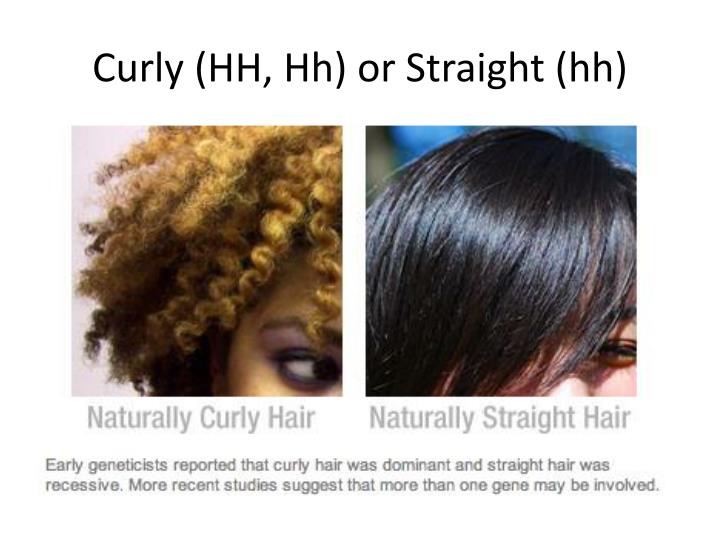
It often has tight coils forming “S” or “Z” shapes and can be either fine or thick. African curly hair is known for its ability to maintain complex hairstyles and is celebrated for its versatility. All these ideas show us how complex and interesting the story of our hair is. It’s not just about curly hair being dominant or recessive, or whether curly hair is rare.
Curly Hair Dominates the Paris Street Style Beauty Scene - Vogue
Curly Hair Dominates the Paris Street Style Beauty Scene.
Posted: Fri, 04 Mar 2016 08:00:00 GMT [source]
Individuals of diverse ethnic backgrounds can possess curly hair, showcasing the beauty of genetic diversity. Certain health conditions can play a role in altering the natural curl of hair as time progresses. Conditions like hormonal imbalances, nutritional deficiencies, or chronic illnesses may contribute to changes in hair texture. Understanding these health-related influences adds a layer of complexity to the dynamics of curly hair turning straight later in life, emphasizing the importance of overall well-being in maintaining hair characteristics. As life progresses, hormonal changes play a role in the transformation of curly hair into a straighter form. Fluctuations in hormones, especially during puberty, pregnancy, or menopause, can influence hair texture.
It is therefore impossible to determine whether these important findings are generally true for specific racial groups, or whether they are phenotypical. A recent study [105] by the same group, where different colour hair from the same racial group was subjected to similar investigations, seems to point to a phenotypical rather than racial origin. Results showed a significant difference in cuticle lipid content, as well as different absorption/desorption dynamics between the white and brown hair. White fibres exhibited decreased absorption capacity and increased rate of permeability. This raises a question about how these observations would differ between fibres of different curliness in the same population.
In addition, early genetic studies mainly looked at a few large families with European ancestry. That means those studies missed a lot of genetic variation that contributes to the wide diversity of traits seen around the world. For example, variation in the TCHH gene is often responsible for curly vs straight hair in people with European ancestry, while variation in the EDAR gene is often responsible for straight hair in people with Asian ancestry.
The intricate dance of our genes plays a major role in shaping our features, from our eye color to our height, and yes, even the texture of our hair. If both parents have a combination of genes (one for straight and one for curly hair), their offspring can exhibit a range of hair textures. Curly hair’s texture is determined by genetics and the structure of hair follicles, which can’t be permanently altered by external treatments.
However, as Sturtevant observed, people can learn to roll their tongue as they get older, suggesting that environmental factors—not just genes—influence the trait. Consistent with this view, just 70% of identical twins share the trait (if tongue rolling were influenced only by genes, then 100% of identical traits would share the trait). But most are influenced by a combination of genes and environmental factors. If your curly headed person actually had wavy hair, he or she would be a Cs. If paired to a straight haired person (ss), then the kids would either have straight (ss) or wavy hair (Cs). The portrayal of curly-haired individuals in different ethnicities across various forms of media plays a crucial role in breaking stereotypes and celebrating the unique beauty of diverse cultures.


No comments:
Post a Comment